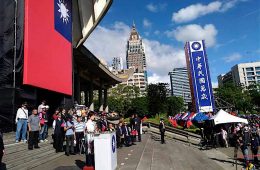

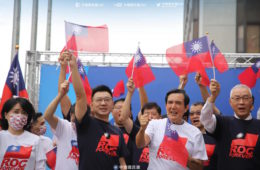
In his National Day address, President Lai Ching-te focused to an unusual extent on the economy. Cross-strait issues were brought up, but only near the tail end of the speech...
A recent speech by Minister of Foreign Affairs Lin Chia-lung proves a point of departure for the Lai administration when it comes to cross-strait discourse, as well as understandings of ROC sovereignty. The speech took place at the ILA-ASIL Asia-Pacific Research Forum, a legal conference attended by fifty experts from twenty countries, which took place in Taipei...
Lai Ching-te delivered the first National Day address of his presidency today. Very little surprised about the speech, in that Lai made no surprising statements on Taiwan’s sovereignty or about Taiwan’s relationship with China. What one does observe from Lai’s speech, however, is the contours of a new historical perspective bridging adherence to the ROC and the resistance against authoritarianism that occurred in the course of Taiwan’s democratization...
KMT chair Johnny Chiang rejected suggestions that the party was considering changing its name last week, with signs of a growing internal split in the KMT. Chiang was asked about the issue after the party passed a resolution to seek to reestablish formal diplomatic ties between the ROC and the US. The resolution surprised, because of the KMT’s historical advocacy of unification between Taiwan and China...
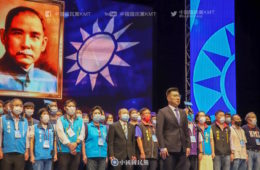
The KMT National Congress, which took place over the weekend, led to the party reemphasizing its commitment to the institutions of the ROC and the 1992 Consensus as the core values of the party. As such, the results of the National Congress indicate that the KMT intends to stay the course where cross-strait policy is concerned...
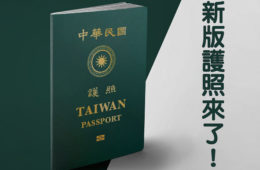
The Ministry of Foreign Affairs revealed a new design for the Taiwanese passport on Wednesday. The new passport design was unveiled under the auspices of preventing confusion between Taiwan and China, a particularly salient issue during the COVID-19 pandemic. The Tsai administration cited cases of Taiwanese travelers being mistaken for Chinese travelers in the course of the pandemic—due to the words “Republic of China” on the passport—to justify the change...
Sometimes minor differences—even just a single word—can have deep implications with regards to how we discuss Taiwan's political status. We might take a look...
News that Burkina Faso has broken ties with the Republic of China has provoked ire in Taiwan over China’s poaching of its few remaining diplomatic allies. Nevertheless, it is also important to note that the effects of such diplomatic poaching will probably accomplish the exact opposite of what China hopes it will do...
Controversy regarding the China Youth Corps and a probe into its finances by the KMT party assets investigation committee, highly reminiscent of earlier controversy regarding the Chinese Women’s Corps, points to the difficulty separating civil society organizations with KMT links from former organs of the former party-state...
Recent attempts by the KMT to attack the DPP on the issue of desinicization have been suitably bizarre, with claims that missing ROC flags from government websites or official invites is a sign of the DPP attempting to peel back the symbols of the ROC. This largely seems to be a sign of desperation on the part of the KMT...