

Taiwan Travelogue, written by Yang Shuang-zi and translated by Lin King, has again put Taiwan on the international stage. After winning the US National Book Award for Translated Literature in 2024, the book has now won the International Booker Prize...
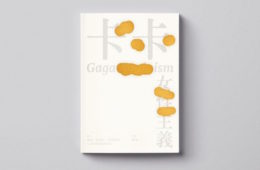
Literary translation is having a moment, particularly in Taiwan. You might have seen the recent, glowing New York Times profile of Tilted Axis, a British publisher specializing in translated literature, or witnessed the frenzy over Lin King and Yang Shuang-zi (楊双子)’s National Book Award win for King’s brilliant translation of Taiwan Travelogue. Riding that wave is Ká-sióng (the Taiwanese Hokkien romanization of 假想), a collection of five newly translated Taiwanese short stories recently published by Strangers Press in partnership with the Taiwan Ministry of Culture, National Museum of Taiwan Literature, and Books from Taiwan. The stories in Ká-sióng, each of which has a different author and translator, are almost dizzyingly diverse, from body horror in an Indigenous Atayal village to sci-fi memory manipulation in a futuristic, flooded Taipei. The stories–which are presented in arbitrary sequence–offer a polyphonic, cacophonous vision of Taiwanese fiction and culture...
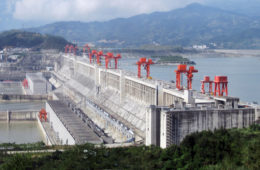
The nuclear bomb certainly posed a serious problem for contemporary philosophy. From Heidegger to Arendt to Marcuse, philosophy in the mid-20th century struggled to deal with this all-annihilating artificial production. Unfortunately, most of these philosophers did not analyze the complex relationships between nuclear technology, capital, state, etc. They did not even attempt to analyze the history or the ABCs of this technology. Hence while they criticized the “atomization” of contemporary society, they did not even notice that the contemporary world is one in which the atom is no longer truly an “atom,” that is, something that cannot be split. What’s worse, philosophy seemed to be totally incapable of dealing with nuclear power. It’s simply beyond the limits of both reason and imagination...
Yesterday evening on Transgender Day of Remembrance, critically acclaimed Taiwanese fiction writer Li Kotomi reluctantly issued a public statement disclosing her transgender status after years of being outed, harassed, and doxxed online by anti-gender accounts in Taiwan. Shortly after, Taiwan Tongzhi Hotline Association issued a statement in support of Li. In addition to her personal TDOR statement, Li also co-organized a “Statement by Authors in Japan Opposing LGBTQ+ Discrimination,” which was signed by 51 novelists in Japan and was released earlier in the day. Li’s public response to her outing comes in the wake of yet another surge in anti-gender discourse online and draws attention to the increasingly transnational character of anti-gender mobilizations in Taiwan...
The International Journal of Taiwan Studies, one of the flagship journals of the discipline, published an unusual piece several months ago by Flair Donglai Shi. Though framed as an attack on Shih Shu-mei’s concept of the Sinophone, the crux of the piece’s argument is effectively that Taiwan studies is insufficiently Sinocentric...
K-Ming Chang is a Taiwanese American poet and the author of Bestiary. New Bloom editor Sheng Kao spoke with her on October 8th to discuss Taiwanese politics and identity and how they take shape in her work, as well as themes in her debut novel, Bestiary...