


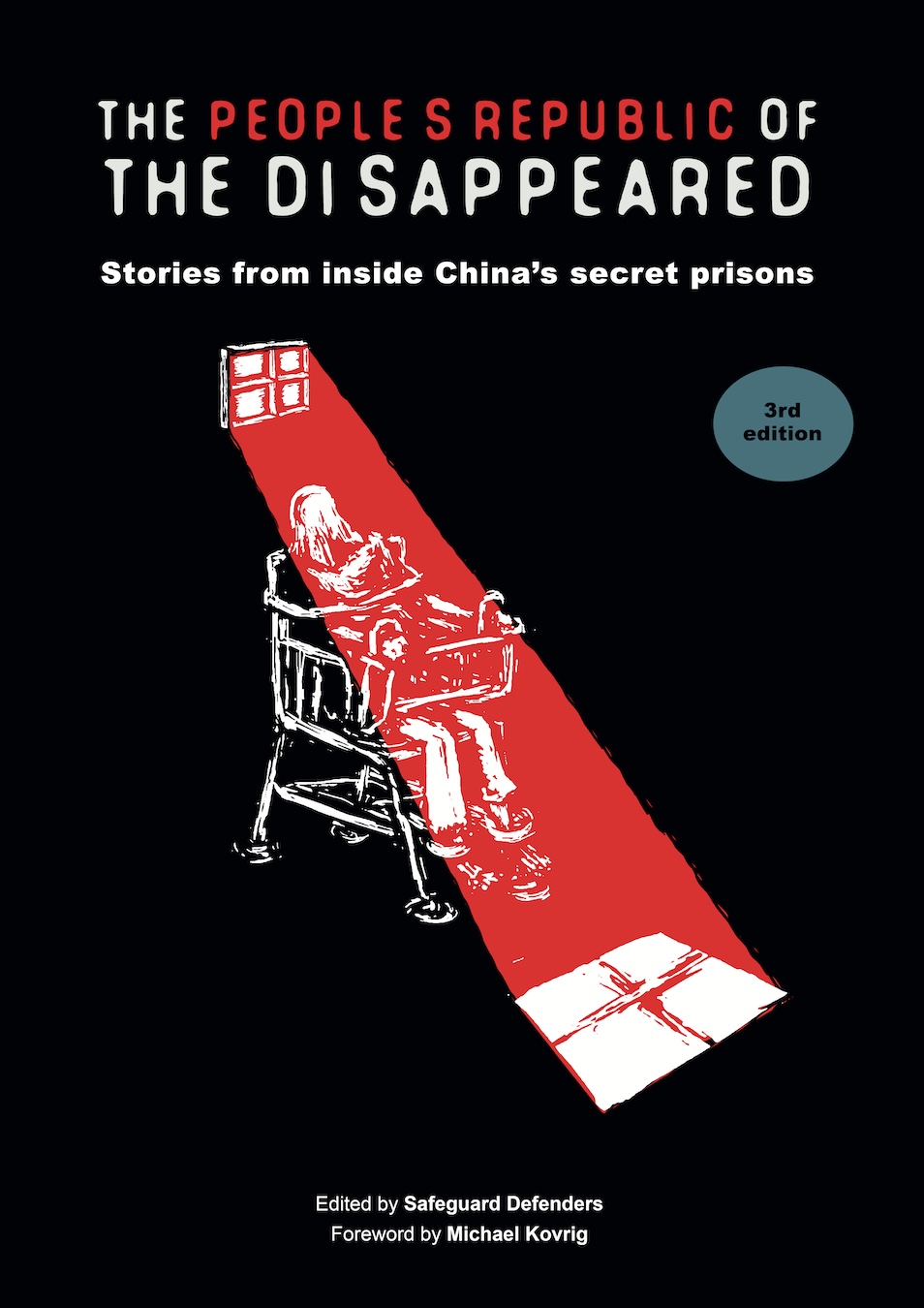

by Dinah Gardner
語言:
English
Photo Courtesy of Safeguard Defenders
WHAT IF I told you that there was a chance—not a very high chance, but a real chance nonetheless—that if you visited the People’s Republic of China today you might be kidnapped, blindfolded, driven to a specialized facility and subjected to six months of psychological torture. All on the orders of the state.
It sounds unbelievable, doesn’t it?
But this is what happened to at least several dozen foreign citizens in recent years. It is what happened to American scholar Min Zin this past June, when he landed in Yunnan province on the invitation of a Chinese academic institution to attend a conference. And it is also what happened to half a dozen people who appear in the latest edition of the book The People’s Republic of the Disappeared, which we just published on 28 October.
This important book is a collection of mostly first-person stories that expose the psychological horrors of being held in the Chinese Communist Party’s (CCP) feared secret detention system called Residential Surveillance at a Designated Location (RSDL). The system permits police to hold an individual in complete isolation, no contact with family or lawyers, to be interrogated for hours at will.
The individual is under 24-hour guard: this includes being watched all day every day, all night every night, whether you are asleep, sitting quietly in your cell or even on the toilet. The CCP intentionally uses RSDL to strip away every last shred of human dignity. RSDL is designed to break a person’s will to extract a confession for crimes imagined by the state
For more than a decade, the CCP has used RSDL against its own people, in particular human rights defenders. It is now increasingly using it against foreign citizens to exert its will across borders and as a kind of hostage diplomacy. Michael Kovrig, a former Canadian diplomat who wrote the foreword to this edition, is one of its most well-known examples.
In editing the stories for this book, I was struck again and again by how similar everyone’s experience was. This speaks to the uniformity of the RSDL system:
- The removal of the temporal world. “There are no clocks in RSDL” is the title of Australian TV anchor Cheng Lei’s chapter. She would guess and count breaths to keep track of time.
- The removal of the physical world. There are no windows in RSDL or they are covered in thick blackout curtains. Japanese scholar Hideji Suzuki cried when he was granted 15 minutes of sunlight, the only time in his seven months’ incarceration when he was allowed to see the sky.
- The removal of yourself. Michael Kovrig noted: “There are no mirrors—not even the reassurance of seeing your own face.” Chinese activist Li Qiaochu writes how she was simply called “target”.
Filling the space left by these absences was a current of fear. Endless rules, the lack of privacy yet total isolation (guards were forbidden from talking to prisoners), reduced nutrition, sleep deprivation, lack of fresh air, and the padded suicide-proofed walls. Several of the detainees wrote while they could never see outside their RSDL facility, at nighttime they would often hear gunfire or the barking of dogs.
“In my mentally exhausted state, the sounds of gunfire would constantly startle me and even cause me to imagine that I was about to be executed,” wrote Taiwanese human rights activist Lee Ming-che.
But something else struck me as I read through their testimonies. However harrowing these stories of suffering are, they are also evidence of human resilience in the face of horror.
Cheng Lei writes about how she would escape into her mind, translating poems, reliving her former TV interviews and making up stories in her head. Similarly, Michael Kovrig meditated, sang songs to himself, and remembered past moments in his life, as if it was a recording playing in his mind.
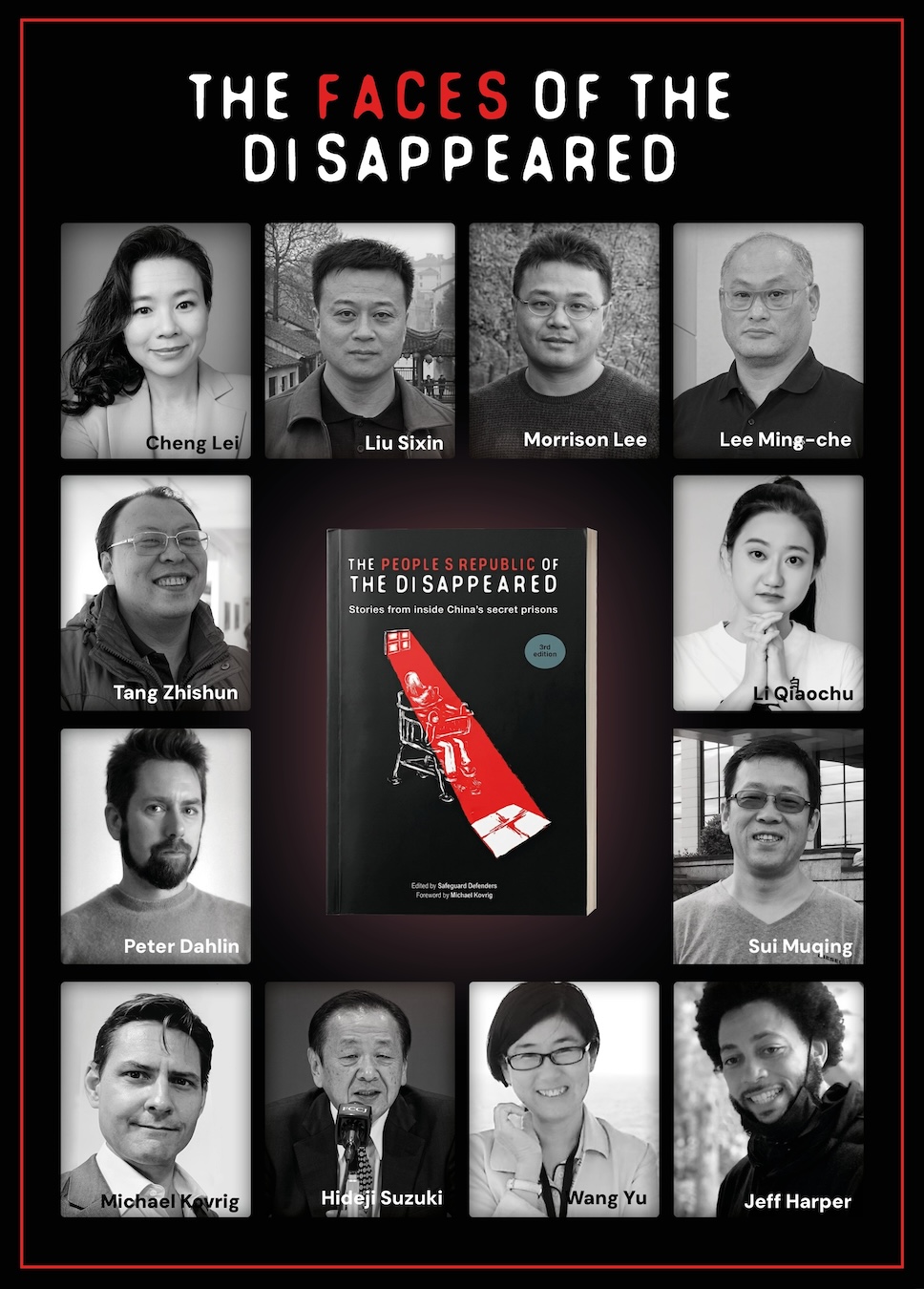
Photo courtesy of Safeguard Defenders
“I learned to meditate on the movies I had watched and the poems and novels I had read,” wrote Li Qiaochu. “Those precious memories allowed me to gradually filter out the brainwashing, to preserve my vitality and to keep myself from being transformed into their machine.”
Feedback from earlier editions informed us that rights activists use the Chinese editions of The People’s Republic of the Disappeared to prepare for and strengthen their mental resolve and courage in case one day they too are taken into RSDL. Knowing that others have gone through this and come out the other side can be an immense help. It’s for this reason that the Chinese edition of this book will be available free to download as a PDF from our website.
In a world where influencers and media wax lyrical about the futuristic cities, advanced technologies and amazing sights in China, in a world where it’s a desirable goal to be Chinamaxxing, we need to remember that there is another side to China, a much darker side.
That is why we are publishing this third edition of The People’s Republic of the Disappeared in English, focusing this time on foreign citizens as targets. Foreigners who never imagined they would be kidnapped by the CCP.
We cannot let the world forget that this is how the world’s second superpower behaves or we will all lose our human dignity in the end.
The English version of the book is available in multiple formats from Amazon. All money raised goes into our urgent actions and advocacy work.