



by Brian Hioe
語言:
English
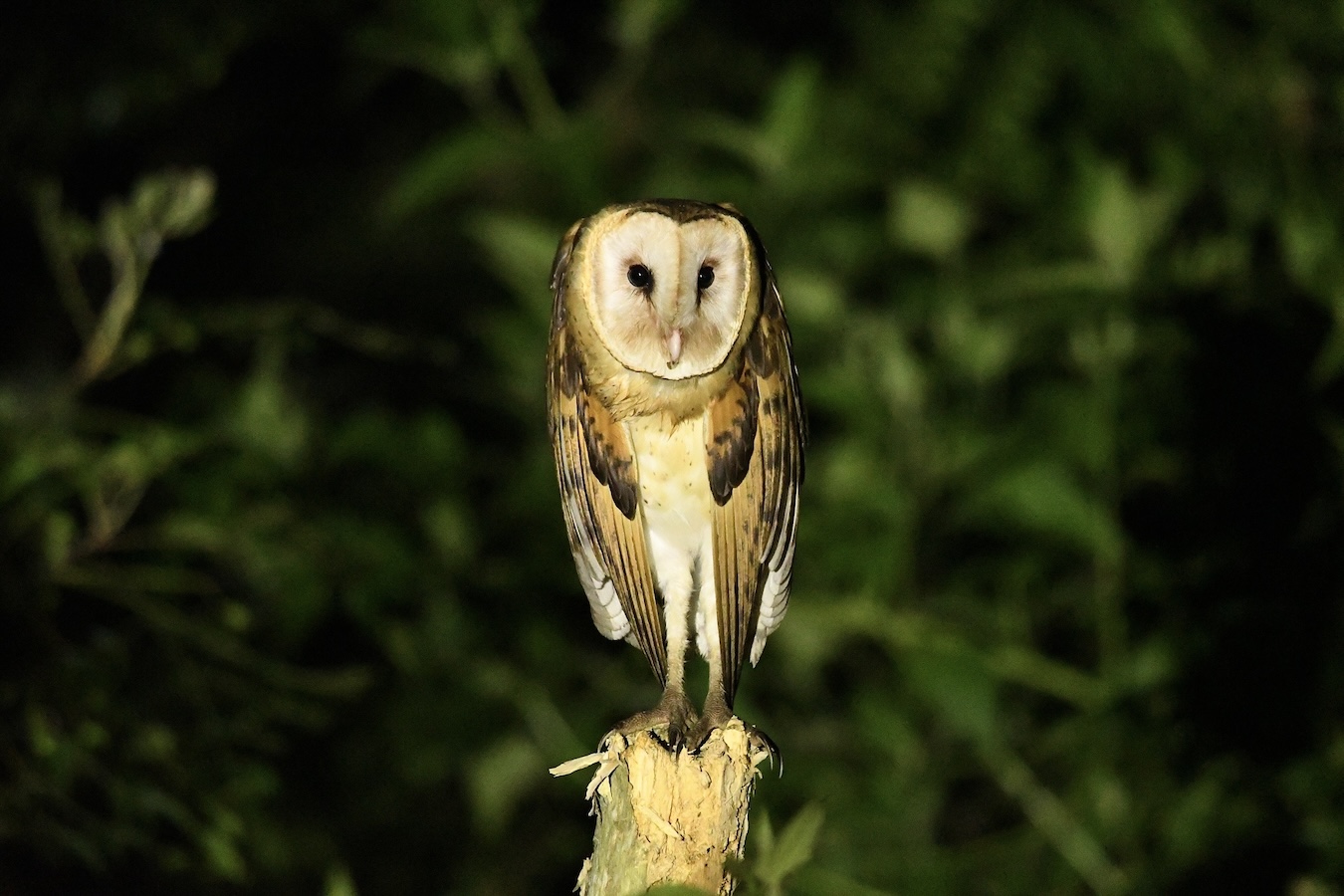
Photo Credit: 王朝威/WikiCommons/CC BY 4.0
ENVIRONMENTALISTS HAVE warned of the potential displacement of the Eastern grass owl as a result of the construction of the Shalun Science Park.
The Eastern grass owl is a critically endangered species in Taiwan, with its habitat including Tainan, Chiayi, Kaohsiung, and Pingtung, and it is Taiwan’s only owl species that nests in grasslands. After much effort by environmentalists to rebuild its habitat on the Dadu Mountain Plateau, the Eastern grass owl was found to have returned to central Taiwan earlier this year. It is thought that the Eastern grass owl disappeared from central Taiwan in the 1960s.
Environmentalists voiced concerns about the owl’s habitat at the second-stage environmental impact review, whose scoping session concluded on October 12th. The planned development zones “Parking 1” and “Industrial 1-2” would threaten the habitat of the Eastern grass owl, in that the current area is considered top-tier nesting grounds for the owl. As such, developers were urged to create habitats for the Eastern grass owl before construction. The Kaohsiung Science Park has been cited as an example of where development has already displaced the Eastern grass owl.
Science parks consume vast amounts of water and electricity. Nevertheless, it is common for local politicians to call for their development, with the view that this brings tech jobs to local populations. Likewise, with Taiwan increasingly central to the AI boom, in terms of providing the world with its supply of necessary semiconductors, this has led to a demand for facilities to keep up the pace–including not only semiconductor fabs themselves, but the facilities they need to keep running, such as power supply. And yet, as seen with the Eastern grass owl, this threatens the local environment.
Indeed, this proves another way in which the AI boom is reshaping Taiwan. While environmental destruction is commonplace with AI development, mostly along the lines of data centers and manufacturing, this can also occur with land acquisition–sometimes infringing on labor rights.
The relocation of Kuai Kuai from its current Taoyuan factory to Hsinchu, which is too far for the existing workers to commute, is due to the land the factory sits on being sold to a semiconductor company. Kuai Kuai’s owners were accused by striking workers, then, of having potentially acquired the land in order to sell it to semiconductor manufacturers, given that it is lucrative real estate. It is possible that land grabs by the semiconductor industry will become increasingly common in Taiwan, something that poses a risk not only to labor but also to the environment. This is to be seen.