



by Brian Hioe
語言:
English
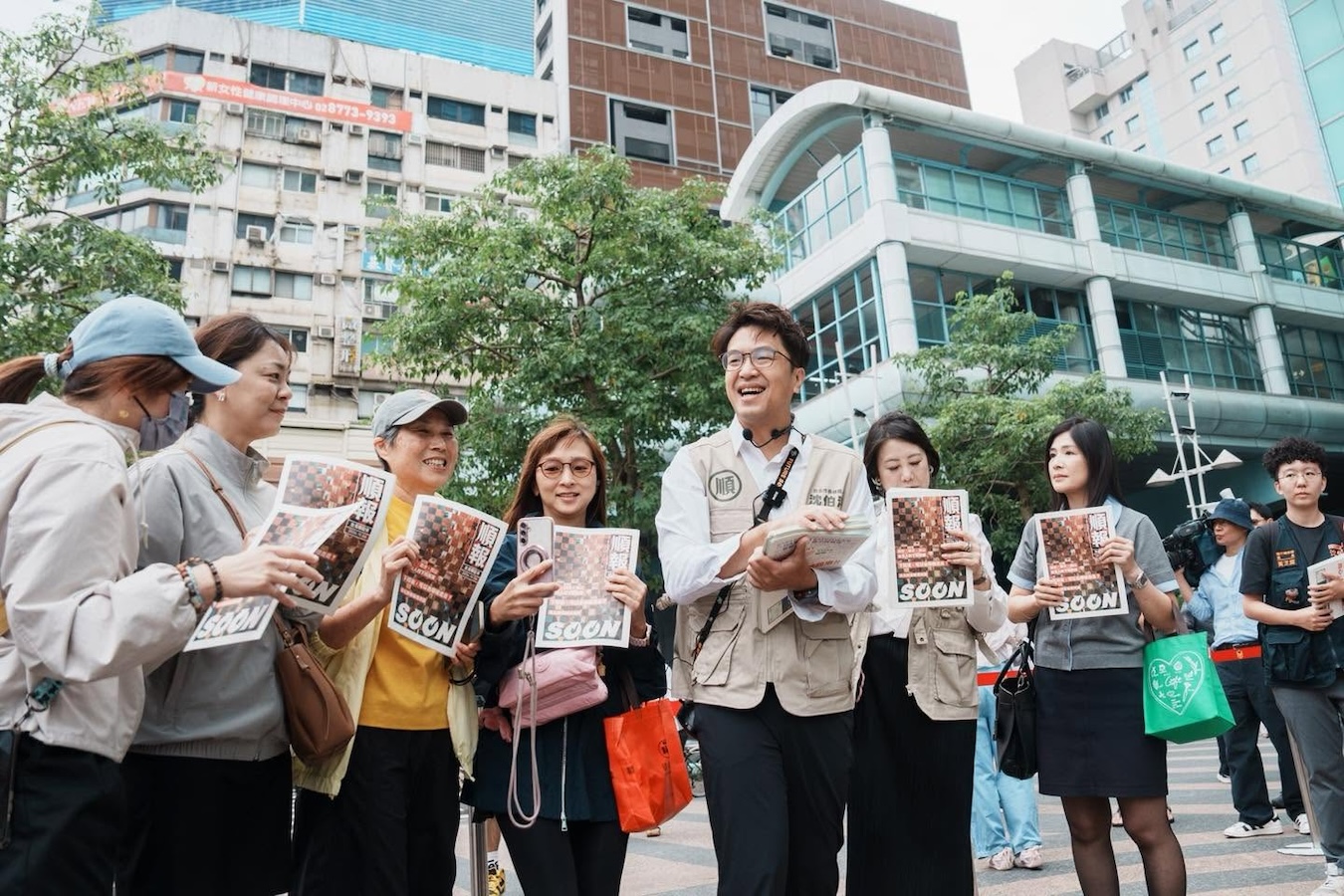
Photo Credit: Puma Shen/Facebook
THE METEORIC RISE of Puma Shen as the DPP’s Taipei mayoral candidate has made what was previously perceived as a relatively slow election into an unpredictable and exciting one. It is generally expected that Shen, whether or not he wins the Taipei mayorship, could be the best-performing DPP Taipei mayoral candidate since Chen Shui-bian in 1992–Chen, of course, later became president.
Shen being sent to run in Taipei was originally perceived as his being sent there as a sacrificial candidate. After all, Shen was previously mainly known for tough stances on China, as the founder of the Doublethink Lab, which researches Chinese disinformation, and of the Kuma Academy, Taiwan’s best-known civil defense organization. It would be expected that he would struggle in historically pan-Blue Taipei. Running Shen, then, would be to field a younger and untested candidate for Taipei, whereas running another post-Sunflower politician, such as Enoch Wu, who had previously contested Taipei mayor Chiang Wan-an unsuccessfully, would have been seen as putting little effort into the race. Shen, as a party list legislator, had never had to run an electoral campaign before.
As Shen has related in interviews, however, as it turns out, the public was little aware of him. This allowed Shen to radically reinvent his image, so as to appeal to Taipei voters. And Shen has doubled down on a focus on good governance.
In particular, while Taipei mayor Chiang Wan-an was previously seen as one of the KMT’s stronger candidates, he has suffered in recent times. Chiang became embroiled in a number of controversies, ranging from a police raid on a gay bar, his abrupt proposal to relocate Songshan Airport, and his son’s placement in a scholarship program for travel to the US.
Chiang was already known for poor public speaking skills, including being unable to relate details of policy and having to rely on aides, but Shen has managed to distinguish himself by seemingly effortlessly being able to respond to questioning and having a deep recall of facts without needing to consult materials or aides. Shen has put forward detailed and intricate policy proposals, with his campaign crafting an image for Shen as a policy wonk.
Shen, then, has been remarkably popular–especially among young people. One notes that Shen was already popular among young people, as one saw during the 2024 Bluebird Movement–one of the reasons why young people mobilized so quickly was because Shen was among the legislators injured during scuffles in the series of events that triggered the movement.
If young people were already fond of Shen, this could be attributed not only to his strong stance on China, but also to his relatable public image–Shen was prone to late-night posts about his sometimes negative feelings on work. One could scarcely imagine Chiang doing the same. This may be another contributing factor to his success at present–his ability to connect to voters on an emotional level, whereas Chiang instead comes off as a nepotistic elite who is remote from everyday concerns.
One can perhaps compare the rise of Shen and the “Ocean Current” phenomenon to the rise of Zohran Mamdani as New York mayor. But if Mamdani campaigned on the basis of promises to act against socioeconomic inequality, Shen has doubled down simply on good governance, based on a strong command of policy, with innovative policy proposals–that this is the political message that has resonated with the public, rather than one of socioeconomic inequality even at a time of widening social inequality, perhaps speaks to the lack of class consciousness in Taiwanese society.
Regardless of whether Shen wins or not–in many ways, despite his missteps, the race is still Chiang Wan-an’s to lose–Shen’s political future is assured. As with Hung Sun-han, another post-Sunflower politician who became a DPP party list candidate, the DPP will likely keep Shen in circulation in government positions so as to keep him in the public eye. Likewise, Chiang Wan-an’s chances of running for president in 2028 may have receded, given how his poor defense against Shen has revealed many political weaknesses, with Chiang gesturing toward backing Lu Shiow-yen as a presidential candidate.