



by Brian Hioe
語言:
English
Photo Credit: Yu tptw/WikiCommons/CC BY-SA 4.0
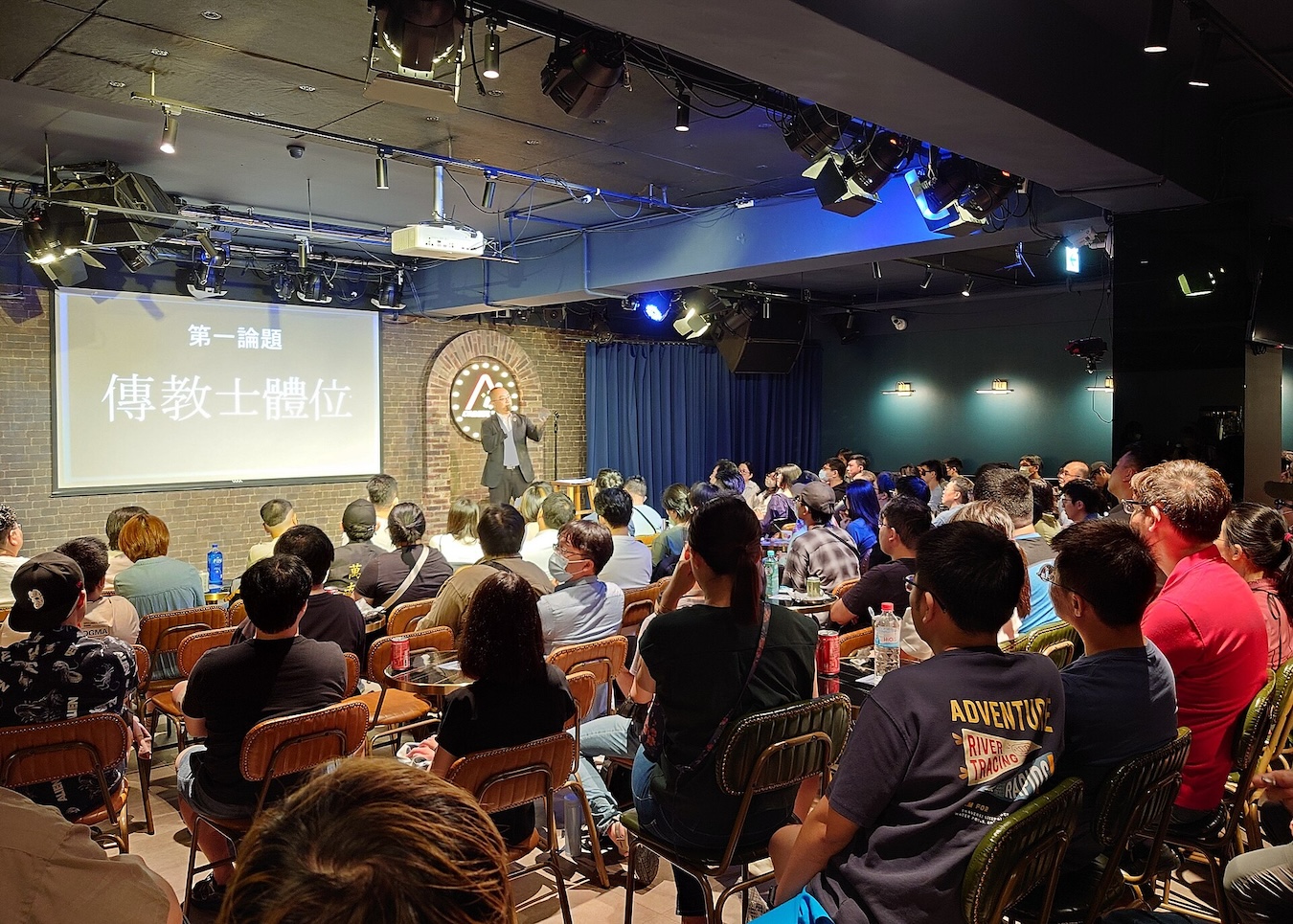
FIVE MEN WERE indicted earlier this week over a plot to run down stand-up comic Huang Yi-hao, in retribution for a comedy show in which Huang mocked Chinese president Xi Jinping.
The five men slammed into Huang with a car, injuring his pelvis, after being ordered to hurt Huang enough to hospitalize him. Subsequently, they acted as though the incident was an accident and assisted Huang with an insurance claim. They then forwarded the picture of the insurance documentation to their handler, a Chinese man referred to in media reporting as K., who refused to pay them the full 450,000 NT promised because Huang was not injured sufficiently.
News of the plot to attack Huang follows suit from the indictment of two men over a May attack on a comedy club where Huang was performing, during which the comedy club had a mixture of feces and paint thrown at its entrance. A 35-year-old man surnamed Kuo was reportedly paid 50,000 NT by a 33-year-old man surnamed Liu to carry out the attack. It is unclear whether the two were acting at China’s behest. The incident was not widely known before the indictment.
Since news of the plot broke, there have been calls to strengthen national security laws to deal with Chinese threats. In particular, the attack on the comedy club and the plot to run down Huang highlight China’s growing transnational repression within Taiwan itself.
It can be seen that there are several recurring tactics used by China when it comes to transnational repression. For example, attacks with feces and paint have occurred on several occasions. In 2020, Hong Kong pro-democracy singer Denise Ho and bookstore owner and publisher Lam Wing-kee, one of the Causeway Bay booksellers, were splashed with red paint by attackers. Some of these attackers were linked to Taiwanese pro-China organized crime groups such as the Bamboo Union gang.
Likewise, the same year, Aegis, a restaurant that assisted Hongkongers seeking refuge in Taiwan, was splashed with chicken feces by men who were paid by a Chinese national to carry out the act.
Earlier this year, a gym owned by a pro-democracy Hongkonger who had previously stood as an electoral candidate was splashed with red paint by two individuals who arrived from Hong Kong. The two individuals departed back to Hong Kong before they could be caught.
Nor would this be the only case in which China has apparently flown individuals to Taiwan to carry out actions that they try to quickly flee from in short order. This was also the case when political commentator Akio Yaita was attacked in a Taichung hotel where Yaita was giving a speech, with the individual in question having been flown in for the attack from Hong Kong, and subsequently attempting to flee abroad. The use of Taiwanese and Hongkongers, or Chinese nationals with Hong Kong passports, for such attacks, however, allows for plausible deniability that avoids being directly traced back to the Chinese government.
In other cases, China simply hires Taiwanese individuals to carry out such attacks, as occurred with Huang. But the attack on Akio Yaita, as well as the attempted ramming of Huang Yi-hao, shows that the level of violence of China’s transnational repression directed at critics may be increasing. Indeed, one notes that in 2025, news broke of a plot by the Chinese military attaché in Prague to ram a vehicle into the motorcade of Hsiao Bi-khim during a visit to the city, during a period when Hsiao was the vice president-elect. The plot could have been construed as either an act of intimidation or even an assassination attempt.
Presumably, the aim with such acts as the car crash plot against Huang would be to depict the Chinese government’s reach as inescapable and penetrating deep into Taiwan, meting out retribution for even simply making fun of the Chinese leader. Still, it is possible that such actions ultimately end up pushing Taiwanese further away from China, in showing the dangers of unification, rather than cowing Taiwanese into submission.