



by Girard Mariano Lopez
語言:
English
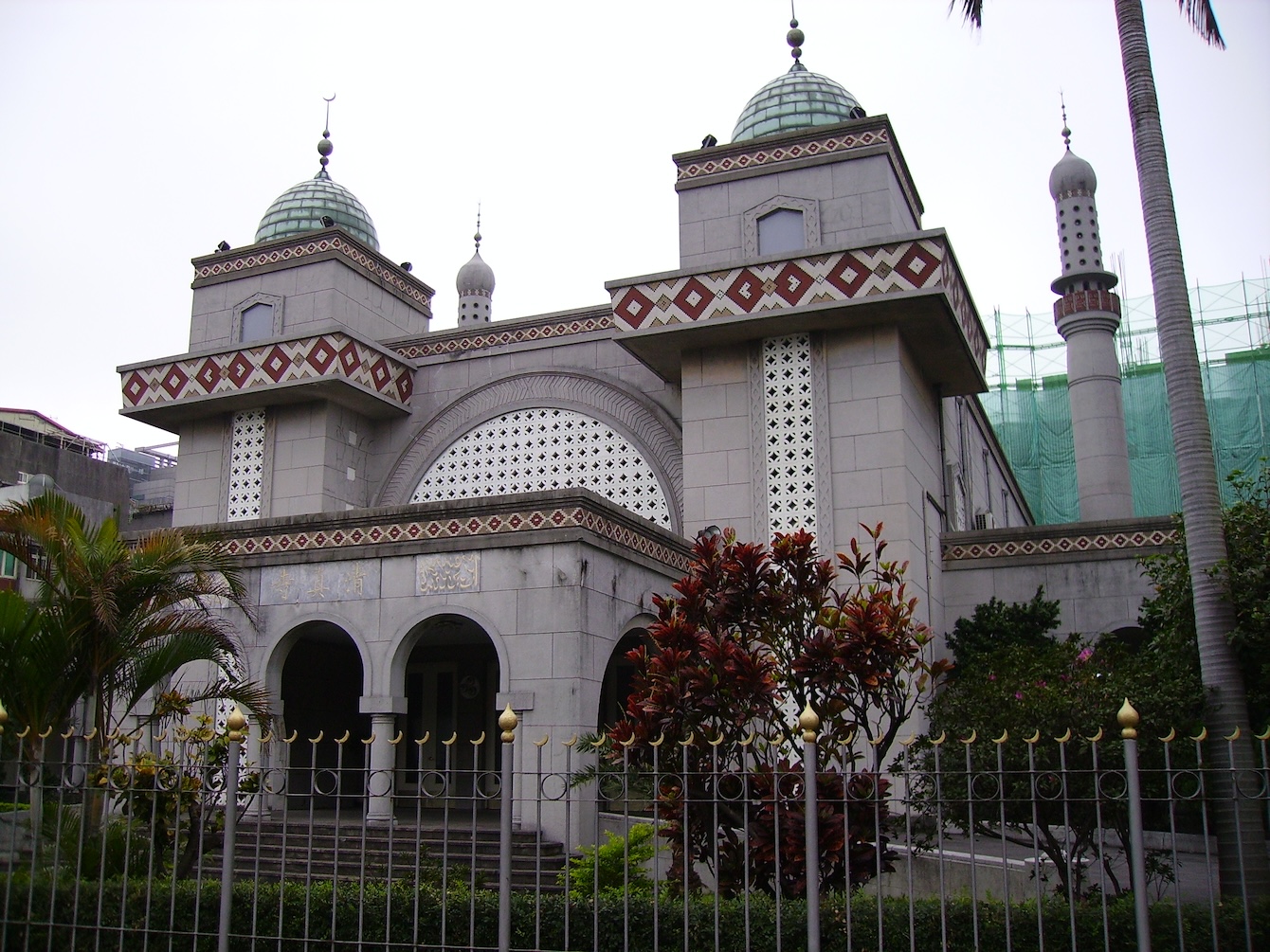
Photo Credit: Winertai/WikiCommons/CC BY-SA 3.0
A DISPUTE OVER control of the Taipei Grand Mosque has spilled into protest after court enforcement against its board’s bank funds—raising concerns about donations, charitable services, and management of the historic religious site.
Dozens of Muslims from more than 10 countries gathered outside the Chinese Muslim Association’s office on October 16th. Organizers said demonstrations would continue every Friday after prayers until association leaders publicly addressed their concerns.
Yaser Cheng, chairman of the Taipei Grand Mosque Foundation, said the dispute threatened resources supporting a congregation that includes migrant workers and international students.
“They took the money from us,” Cheng said in an interview, describing funds he said included small donations from Indonesian workers and other worshippers. “It’s not from our board pocket.”
The Chinese Muslim Association, or CMA, has yet to respond to requests for an interview.
The conflict centers on competing claims over property rights and the authority to manage the mosque, which opened in 1960 and became a Taipei municipal historic monument in 1999. It remains a place of worship and a gathering point for Taiwan’s international Muslim community.
Cheng said the foundation had managed the mosque continuously for 66 years and should retain responsibility for its operations. He argued that its longstanding work gave it experience essential to maintaining religious services and community activities.
An analysis of court and banking documents supplied by Cheng supports a court-enforced collection of NT2,835,977 dollars from the foundation’s funds on September 24th, including a NT250 dollar fee. The bank transactions reconcile with the amount authorized in a Sept. 17 court order.
Cheng described the financial demands as rent and interest, saying the charging of interest was upsetting to worshippers because of Islam’s prohibition on riba (interest).
The documents, however, do not provide an itemized breakdown establishing how much of the collection represented rent, judgment interest, or other charges.
The mosque’s board put the broader financial impact at NT9.4 million dollars, including NT6.5 million that it said was frozen. Cheng explained that although the bank note does not reflect the freeze, they still cannot use it nor do they know how much more the CMA will take from the amount.
Records also list NT$7.5 million in remaining fixed deposits as of Oct. 1, but do not establish whether all those funds were accessible.
Cheng said financial pressure had curtailed assistance for poor people and plans to purchase cemetery land. However, he said the foundation would retain its employees despite the strain, describing its staffing resources as already limited.
He also accused the opposing institution of using financial pressure to force the board out. The documents establish that funds were collected through court enforcement but do not independently establish that motive or wrongdoing by either institution.
The documents include a September 2023 order requiring the foundation to vacate and return the mosque building. They do not establish that an eviction occurred or clarify the present status of proceedings concerning possession.
The property dispute stems partly from arrangements involving former landowner Chia Hsin Cement and the city’s efforts to preserve the mosque.
Cheng alleges that former mosque chairman Ma Chao-yen arranged for property rights to benefit the opposing foundation without proper board authorization.
But TaiSounds reported in January that prosecutors declined to indict Ma for breach of trust, finding insufficient grounds for prosecution over the arrangements. That decision did not resolve every separate civil or governance issue.
In earlier reporting by Taiwan’s Central News Agency’s Indonesian service, an unnamed representative of the opposing foundation said worship would continue and characterized disputed payments as tax-related.
For worshippers, uncertainty extends beyond the courtroom.
Raja Ramadhana, an Indonesian doctoral student at National Taiwan University of Science and Technology, said the dispute complicated his understanding of whom to approach when organizing community activities.
He said he usually worked with the mosque foundation but wanted the association to explain its position before drawing conclusions.
“For now, the information is so imbalanced,” Ramadhana said.
He described the mosque as a place for Friday prayers, student gatherings and community events. Hearing from both institutions, he said, was essential to understanding a conflict whose history stretched back decades.
An Indian student interviewed at the mosque said regular prayers remained accessible, while calling for clearer explanations of the dispute.
Cheng said the board would pursue legal action, seek assistance from city and central government officials, and appeal to public opinion.
“We will seek support from the local and international community,” he said.
He also argued that the mosque’s future mattered beyond its congregation because of its longstanding role in Taiwan’s engagement with Muslim communities abroad. His immediate demand was for association leaders to meet worshippers and explain their actions.
“Come out, talk to everybody. Don’t hide yourself in your room,” Cheng said.
He said the dispute concerned donations entrusted to the mosque by the wider Muslim community, rather than money belonging personally to board members.
For worshippers such as Ramadhana, the concern remains whether the competing institutions can explain their claims while keeping religious and community activities running.