



by Brian Hioe
語言:
English
Photo Credit: Liu Shu Fu/Office of the President/Flickr/CC BY 4.0
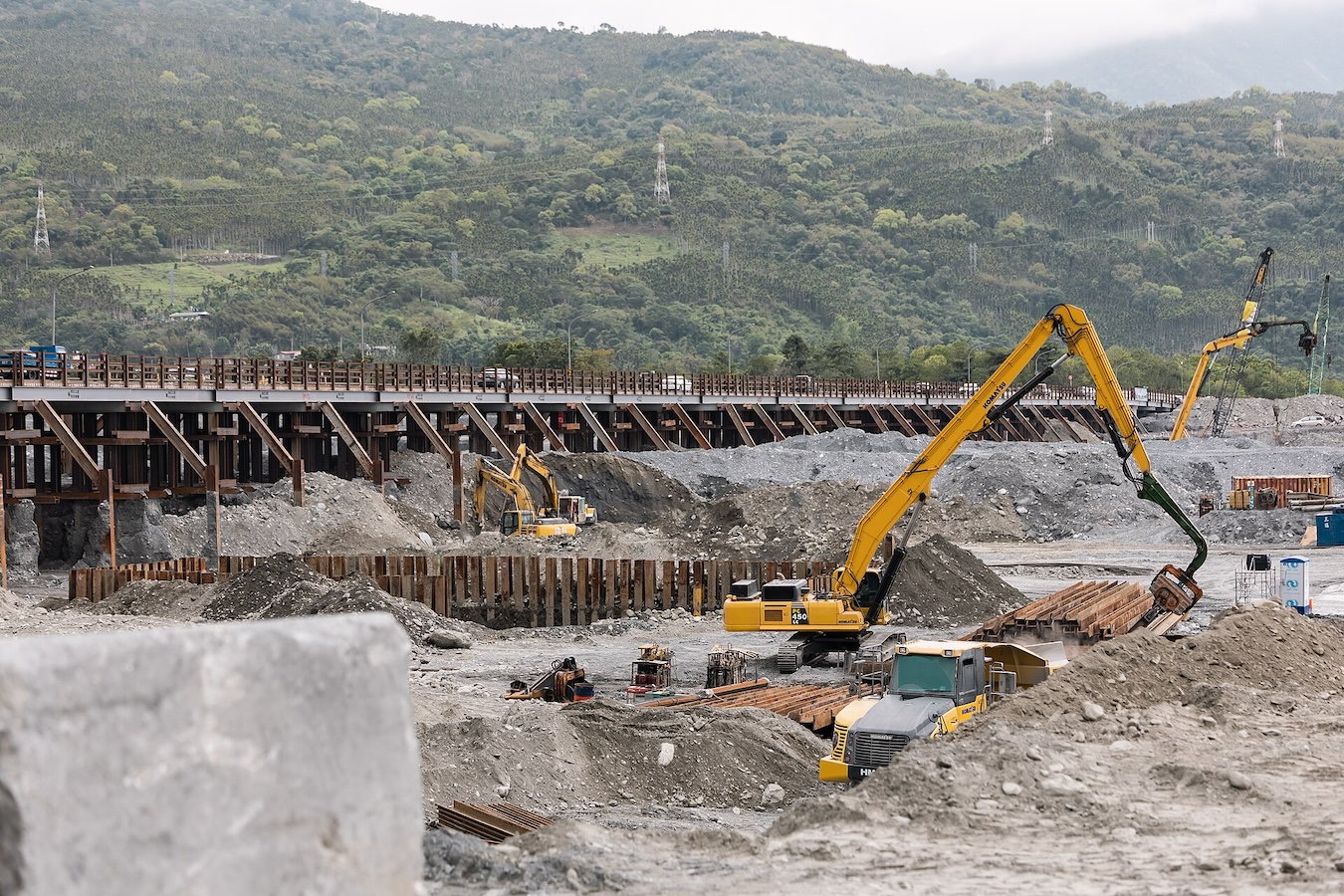
INDIGENOUS COMMUNITY members protested last month outside of the Executive Yuan, marking the one-year anniversary of deadly flooding in Matai’an, also known as Guangfu Township. The deadly flooding occurred after Typhoon Ragasa in September 2025.
Such community members have called on the Executive Yuan to ensure that reconstruction is carried out in coordination with the wishes of the local community, while working with the local government to do so. On the other hand, community members have criticized when reconstruction takes place in such a manner that leads to mass land expropriation, depriving local residents of their land.
In this sense, Matai’an community members have criticized broken promises from the government, which has promised to fund reconstruction and provide resources. The protest also raises how Matai’an has become highly dependent on donations from the outside world after the deadly flooding.
As part of the demonstration, participants threw plastic bottles filled with sand and water from Matai’an at photos of KMT caucus leader Fu Kun-chi, Hualien county magistrate Hsu Cheng-wei, Ljaucu Zingrur, head of the Council of Indigenous Peoples, and minister without portfolio Chen Chin-te.
One notes that anger, then, is directed both at the central and local governments. In particular, Fu Kun-chi and his wife, Hsu Cheng-wei, are often understood as members of a political dynasty that rules over Hualien. Fu and Hsu have been criticized as not doing enough for Hualien in the aftermath of Typhoon Ragasa, as well as after successive earthquakes have damaged infrastructure there. At the same time, the central government and the Council of Indigenous Peoples have also been criticized for failing to take sufficient action in the aftermath of the disaster–as well as to avoid such disasters occurring in the future.
Indeed, one notes that in the aftermath of the deadly flooding, Fu attempted to put the blame for the disaster on the central government. Fu alleged that the central government did not warn local authorities in time, and suggested that the central government was mostly at fault for delays in reconstruction.
Either way, one notes that though there was a wave of volunteers who traveled to Hualien to assist in the aftermath of Typhoon Ragasa, attention has now shifted elsewhere. Likewise, if external aid in the wake of the disaster is simply followed by how the disaster is used as a pretext for land seizures, this continues colonialism directed at Indigenous communities. It proves deeply colonial, of course, if a disaster simply serves as a pretext to conduct land seizures and further displace Indigenous people from their land.