



by Girard Mariano Lopez
語言:
English
Photo Credit: Em Gunter
A POLICE RAID on a longstanding gay bar in Taipei sparked a lightning protest and demands for independent oversight after patrons alleged humiliation and discrimination, prompting disciplinary action against officers and an apology from the mayor weeks before the city’s annual Pride celebrations.
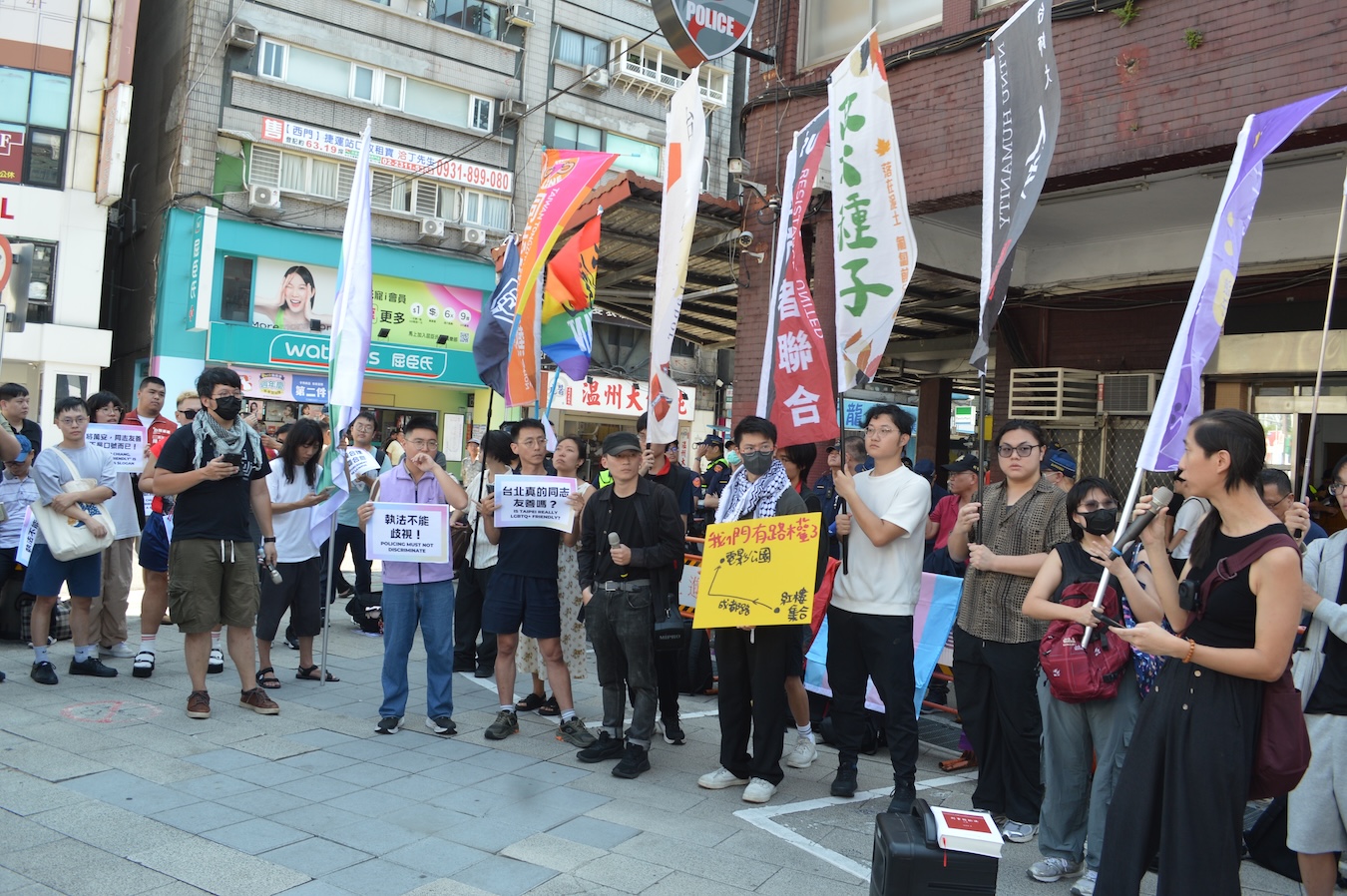
About 100 to 200 people gathered at 1 p.m. Oct. 4 outside a police substation near Red House, a landmark in Taipei’s LGBTQ+ district. After speeches, demonstrators marched through the busy neighborhood to the Ximending Police Station which reportedly dispatched the order to raid the gay bar, demanding an explanation and apology for the previous afternoon’s operation at Commander D.
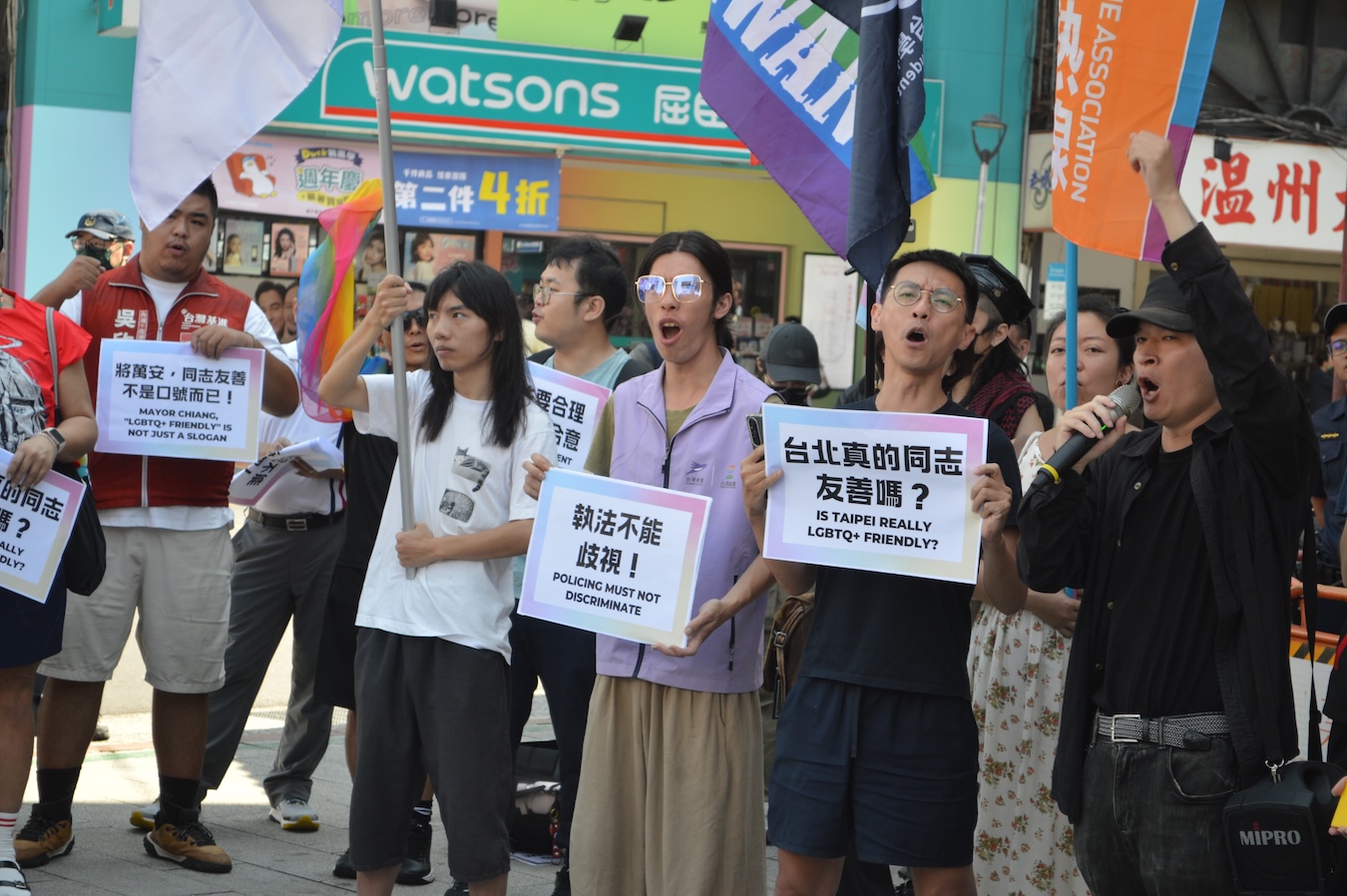 Photo credit: Em Gunter
The dispute has drawn scrutiny of police treatment of sexual minorities and intensified questions about whether Taipei’s promotion of LGBTQ+ inclusion abroad is reflected in its policing at home.
Officers entered the BDSM-themed bar Oct. 3 with what police described as a court-issued search warrant obtained under prosecutors’ supervision following complaints about suspected sexual offenses. Police said the establishment had received 13 complaints this year.
Authorities said 51 people were referred for suspected violations of the Social Order Maintenance Act and the operator for a suspected criminal offense. That account differed from protest speakers’ figure of 59 people taken for questioning.
Protest organizers said the operation lasted nearly five hours. They alleged officers refused to show customers the warrant, ordered people to squat and restricted conversation and cellphone use. Patrons also reported being prevented from putting on clothing before being taken to the police station.
Organizers said officers directed derogatory comments about sex toward a wheelchair user and handcuffed the manager, who they alleged was ordered to kneel after protesting police conduct.
Police initially denied insulting disabled patrons and maintained that officers followed lawful procedures. By Oct. 5, however, authorities acknowledged inappropriate remarks by four officers after reviewing recordings. Each received two reprimands, the supervising investigation chief received a demerit, and the Wanhua precinct chief requested two reprimands for inadequate supervision.
Police maintained that the warrant had been displayed, leaving conflicting accounts about whether customers were adequately informed of the search’s basis.
The operation followed a September council exchange in which Democratic Progressive Party Councilor Hung Chien-yi raised allegations that minors were entering the establishment and being treated as sexual playthings. Mayor Chiang Wan-an subsequently ordered police to investigate.
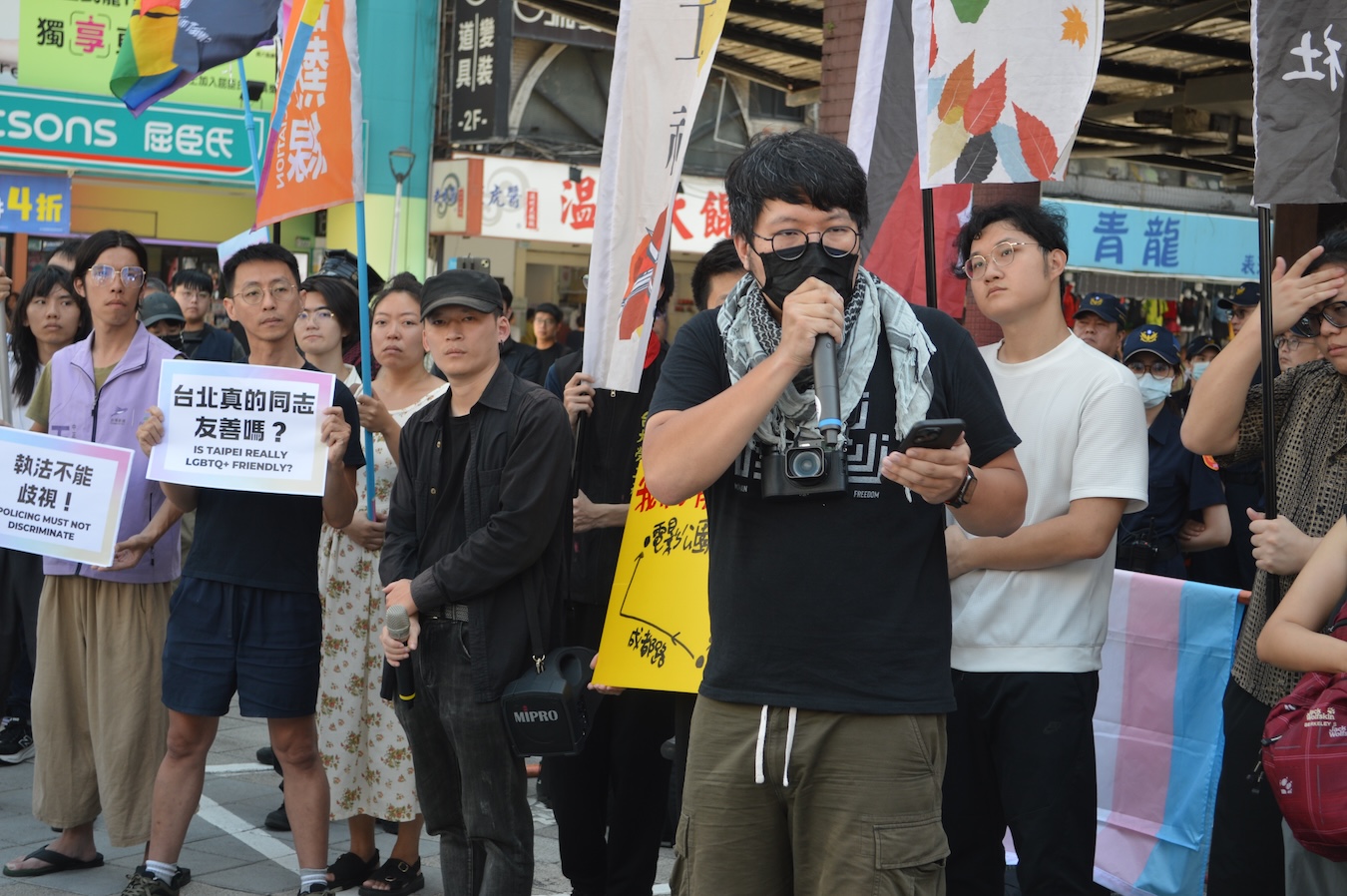 Photo credit: Em Gunter
Commander D denied the allegations, saying it checked identification and ages at entry. The bar, which said it had operated for 14 years, distinguished private interactions between adult customers from activities arranged or directed by its management and said it would cooperate with lawful investigations.
Although speculation linked the raid to drugs, police publicly described its basis as suspected sexual offenses. At Sunday’s protest, Green Party city council candidate Wang Chen-ting rejected suggestions that the operation uncovered illegal drugs.
Wang said medications examined by officers included HIV prevention drugs and produced no positive drug findings. Wang also alleged that records showed eight police inspections of the venue within 15 days the previous month.
People taken for questioning were denied food and water for hours and faced leading questions about sexual activity, Wang said.
Protest organizers also reported police visits to Hunt and Locker Room, two other gay venues, that night. They demanded an explanation of the legal justification for the operations and questioned whether queer gathering places were being subjected to discriminatory scrutiny.
Outside Ximending Police Station, demonstrators called for the police chief to come down, explain the operation and apologize. Instead, Wanhua internal affairs officer Lin Sheng-wei addressed the crowd, promising an investigation and disciplinary action where warranted, without offering an apology.
“If our colleagues are at fault, they should be disciplined,” Lin said.
Organizer Yang Kang concluded by handing Lin a copy of Taiwan’s Code of Criminal Procedure, underscoring protesters’ demand that officers follow legal safeguards when exercising police powers.
Chiang, of the Kuomintang, initially defended the operation’s legal authorization while ordering a review of possible misconduct. On Oct. 5, he apologized and said police discipline must be strengthened to prevent officers from engaging in discrimination.
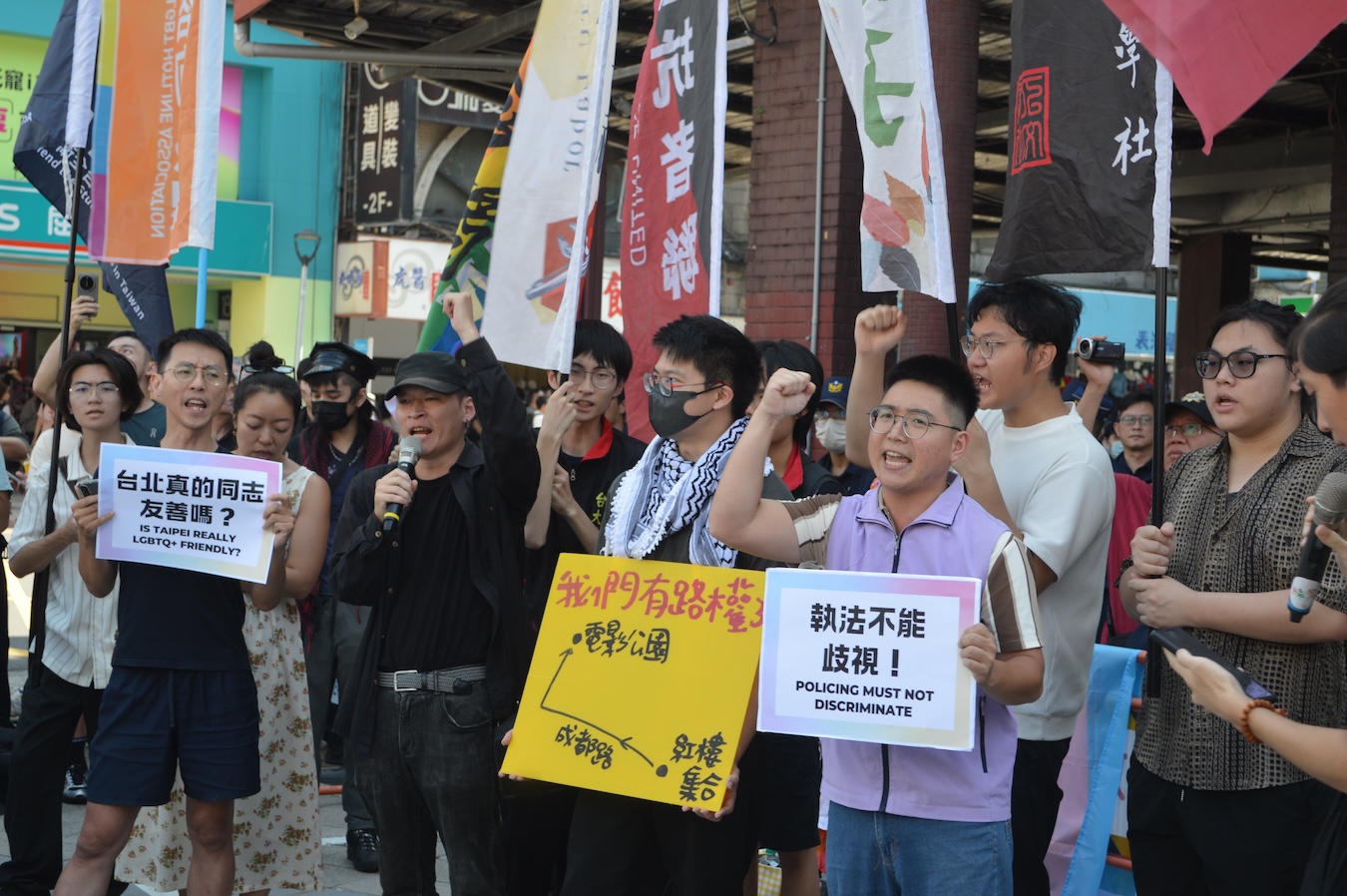 Photo credit: Em Gunter
His Democratic Progressive Party challenger, Puma Shen, said lawful investigations still required scrutiny of police methods and equal respect for everyone’s dignity.
“Taipei’s diversity and inclusion should not be visible only on the day of the Pride parade,” Shen wrote, arguing that those values must extend to everyday policing and city institutions.
The controversy unfolded amid a separate election dispute over drug policy. Shen cited needle exchanges and methadone treatment in defending harm-reduction approaches, while Chiang accused him of blurring distinctions between illegal drugs and medication. Chiang said Oct. 4 that he continued to support methadone treatment and access to clean needles.
At the protest, Chiang Shu-hung, representing a Taiwanese sex workers’ rights organization, questioned whether the approaching election had contributed to the crackdown. No evidence presented established an electoral motive for the raid.
The mayor’s LGBTQ+ record had already become a campaign issue after critics questioned a photograph used in his Harvard University presentation. They said an image from a Halloween appearance had been presented as evidence of his participation in Taipei Pride.
City officials rejected accusations that Chiang had fabricated his attendance, producing a separate photograph and schedule records that they said showed he attended both events that day.
For LGBTQ+ advocates, the raid raised concerns extending beyond the election.
A coalition of more than 50 organizations, including the Taiwan Tongzhi Hotline Association, demanded an independent investigation, preservation, and lawful disclosure of enforcement recordings, and clear policing guidelines for LGBTQ+ venues. It also sought enforceable protections against discrimination and an end to stigmatizing descriptions of queer sexuality.
The groups said additional training alone could not resolve questions about coercion, procedural safeguards and accountability. Police should investigate specific suspected offenses, they argued, rather than treat sexual orientation, bodily expression or BDSM practices as evidence of criminality.
At the protest, hotline representative Kao Chih-lung linked the raid to earlier police harassment of gay gathering places, including Taipei’s parks and venues in the 1990s. The coalition also cited a 2025 search of a gay establishment in Taichung that it said subsequently closed.
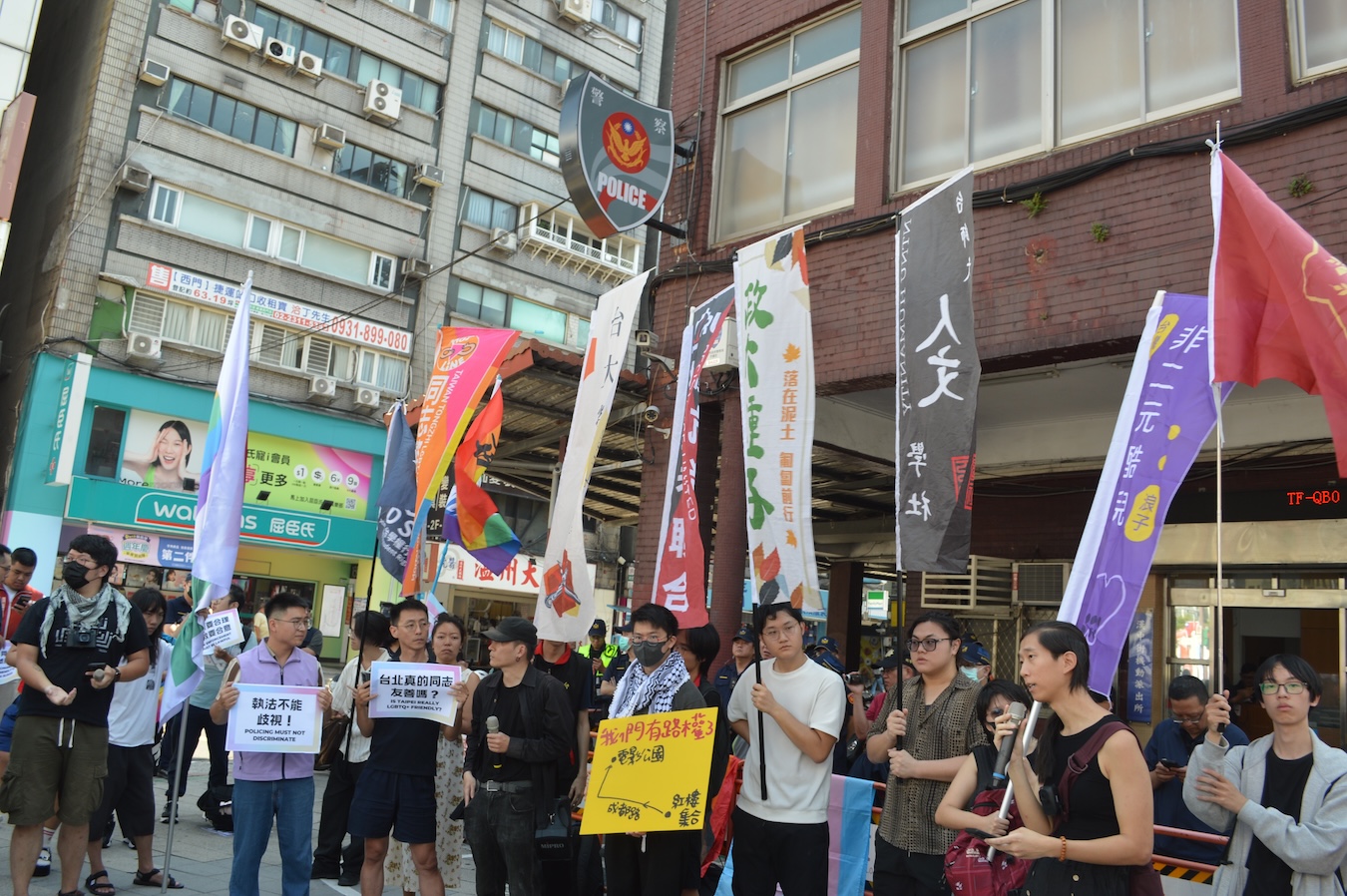 Photo credit: Em Gunter
Those experiences, advocates said, made the Commander D operation more than an isolated dispute. It revived memories of surveillance, public exposure, and humiliation among people who had relied on queer venues for community and safety.
With Pride approaching, the groups accused Taipei of promoting LGBTQ+ culture as an international tourism asset while failing to protect the people who sustain it. They warned that discriminatory enforcement undermined the city’s assurances that queer residents and visitors could gather safely.
A search warrant, they said in their joint statement, must never become blanket authorization to violate human rights or treat an entire community as inherently criminal.