



by Brian Hioe
語言:
English
Photo Credit: Presidential Office/Flickr/CC BY 2.0
ACCORDING TO TAIWANESE national security officials, leaked Chinese government documents show the extent to which China engages in checkbook diplomacy.
Specifically, in an interview with the Liberty Times, National Security advisor Alex Huang comments on documents that purport to show Beijing offered Micronesia 1 million yuan–subsidizing the purchase of a vehicle. This was reportedly in exchange for blocking Taiwan’s participation in the World Health Organization.
Other documents in the leaked tranche of documents appear to show China’s influence over African Union countries. The documents apparently show that the African Union accepted 200 million yuan in a “renovation grant” from China, but sought further funding in order to upgrade its headquarters, to the tune of 50 million USD.
Efforts by China to constrain Taiwan’s diplomatic influence in Africa have become increasingly visible, especially after a trip to Eswatini by President Lai Ching-te for the 40th anniversary of King Mswati III’s accession to the throne was canceled at the last minute. This was because the Seychelles, Mauritius, and Madagascar revoked overflight privileges for Lai’s aircraft at the last minute, though Lai later traveled to Eswatini aboard Mswati III’s personal plane at a later date.
Likewise, Taiwanese participants were blocked from attending a United Nations conference on the ocean in June, with delegates detained and held for over 20 hours and their passports confiscated. Morocco has begun to suspend the issuing of visas to Taiwanese, while there have also been cases reported in Uganda of Taiwanese having their passports confiscated. To this extent, the cancellation of RightsCon in Zambia in July is thought to have occurred due to the planned participation of Taiwanese delegates, who were expected to make comments critical of China.
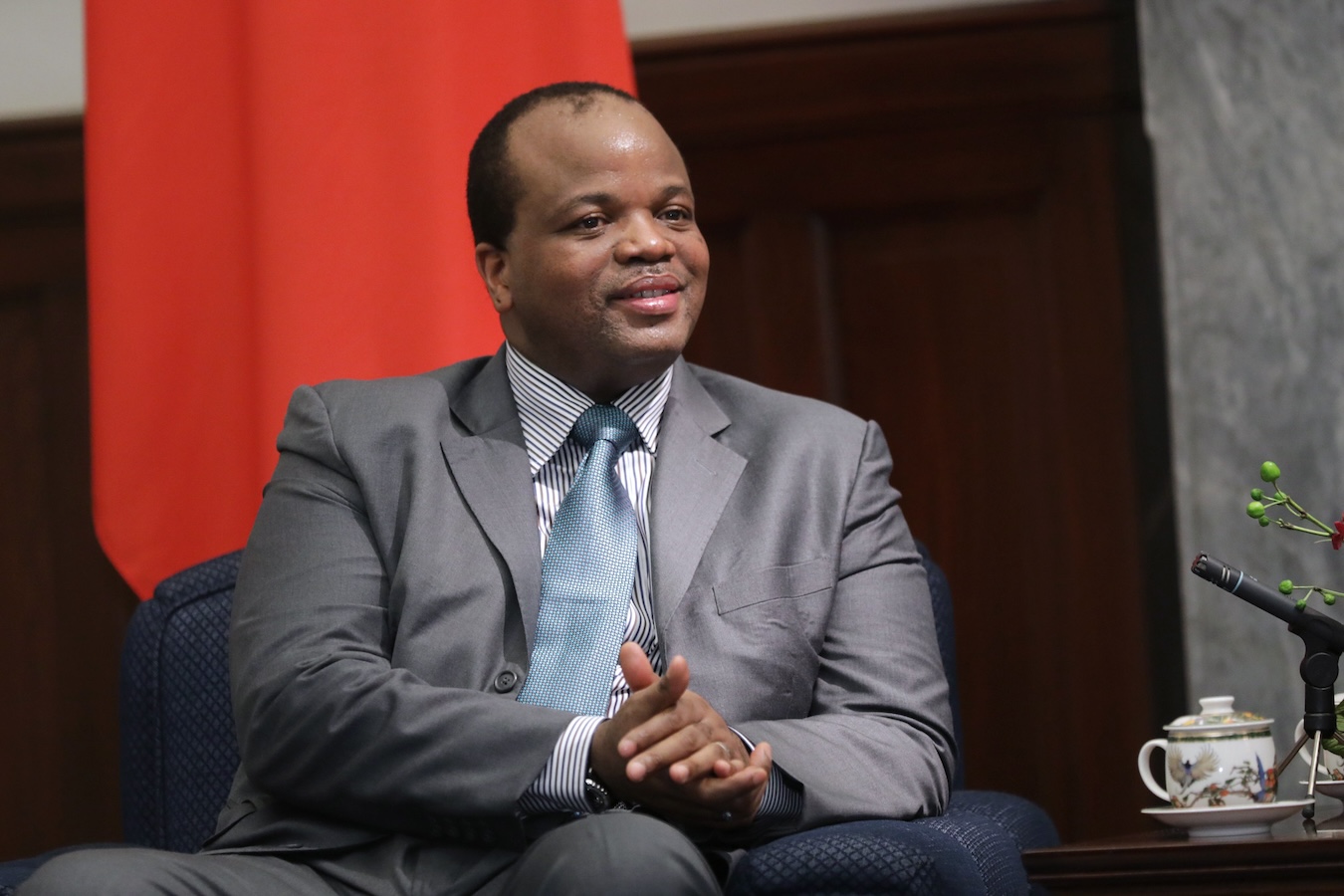
Still, one notes that Taiwan itself frequently participates in checkbook diplomacy. Eswatini is, for example, an absolute monarchy that Taiwan financially backs in spite of its repressive regime–in which King Mswati III presides over a country in which the constitution is suspended, democratic elections are forbidden, and dissent is put down by force. There have also been other cases in which Taiwan provided financial support to authoritarian regimes in return for recognition, such as Honduras, and a number of other cases.
Nevertheless, Taiwan cannot outspend China, as a result of which it has become increasingly common for Taiwan’s diplomatic allies to switch recognition to China in past years. Likewise, in consideration of that Taiwan is larger than all of its diplomatic allies in terms of the size of its economy and population; for small countries, China is the larger market. In the cases highlighted by Huang, these were also mostly countries that Taiwan does not have diplomatic relations with, but which China does.
On the whole, there is little domestic awareness that Taiwan’s diplomatic allies are mostly such countries with checkered human rights records, and if the Taiwanese government has often hit out at China’s diplomatic checkbook, many Taiwanese are unaware of similar actions by Taiwan. It remains to be seen if this will change.